“Every enduring achievement is built twice: first in the architecture of the mind, and only then in the world.”
—Dan Keck, Fairbanks, Alaska

Dan Keck is a systems architect whose career has focused on understanding how complex systems behave and how they can be redesigned to produce better outcomes. Over more than four decades, his work has spanned engineering, advanced manufacturing, experiential retail, environmental stewardship, infrastructure, hospitality, organizational development, and community planning. Across each of these disciplines, one objective has remained constant: reducing uncertainty through disciplined observation, practical engineering, and thoughtful design.
Raised in New Jersey, Keck’s earliest education came not through formal instruction but through work alongside his grandfather. While working together, they listened to Rambling with Gambling on the radio, discussing business, current events, and human behavior during commercial breaks. Those conversations instilled a habit that continues to define his work: question assumptions, seek evidence, and remain willing to change your mind when reality demands it.
Early in his career, Keck adopted a principle that has guided every major undertaking:
If the facts disagree with the theory, the theory, not reality, is wrong.
That commitment to evidence over assumption remains central to his approach to engineering, leadership, and public policy.
In 1989, Keck founded Mackenzie Keck Global, Ltd., an international experiential development and engineering firm that completed more than $3 billion in cumulative project value across 15 countries, conducting business in five currencies. Under his leadership, the company partnered with organizations including Mars Wrigley, Tesla, Louis Vuitton, Cartier, Rolex, Tommy Hilfiger, Abercrombie & Fitch, Coach, Urban Outfitters, Anthropologie, Victoria’s Secret, Under Armour, Tory Burch, Armani, and numerous others.
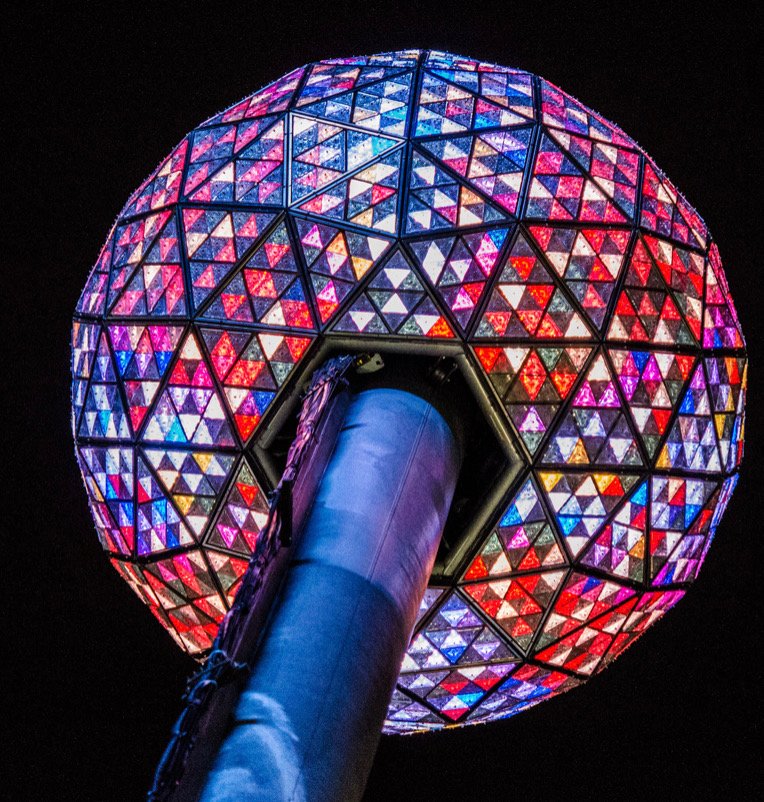
Among the firm’s longest professional relationships was more than twenty years of work for Mars Wrigley, completed across multiple countries and numerous U.S. states, including projects for the company’s North American Headquarters. Mackenzie Keck Global also contributed to internationally recognized work including the redevelopment of #1 Times Square in New York City and Olympic-related venues in London.
Recognizing that ambitious projects often demanded capabilities beyond those available commercially, Keck expanded the firm through specialized engineering, purpose-built machinery, and the acquisition of Concrete Design Studio, an advanced polymer-based high-performance concrete company serving architecturally demanding applications.
Earlier in his career, Keck co-authored Retail Resonance, a study examining how architecture, atmosphere, and environmental experience influence customer behavior. The work introduced the concept of rememberals, describing meaningful objects that preserve emotional connections to memorable experiences.
Today, Keck serves as Founder and Executive Director of dx/dt LLC and North 50 Building Systems, and as Founder of the North Star Grand Lodge in Fairbanks, Alaska. Together, these organizations reflect his continuing interest in advanced building technologies, environmental engineering, resilient infrastructure, manufacturing innovation, and long-term community development.
Environmental stewardship has become a defining theme of his work. Keck believes thoughtful engineering and science can help restore ecological systems by improving water quality, rebuilding native habitats, removing invasive species, and allowing nature to recover. He often observes that returning bird populations are among the clearest indicators of ecological health.
This philosophy shaped the location of the North Star Grand Lodge. Rather than developing untouched wilderness, Keck intentionally selected previously disturbed land, believing damaged landscapes offer opportunities for restoration and long-term stewardship.
“The Arctic is the world’s most honest proving ground. Technologies that succeed here can succeed almost anywhere. My vision is to establish Fairbanks as the world’s Arctic Innovation Center, where learning is accelerated and qualifications are earned.”
Keck also founded the Keck Foundation, a nonprofit organization established to encourage greater public discussion surrounding genetically modified organisms in the food supply. Although its legislative objectives were ultimately unsuccessful, the effort reflected his longstanding willingness to engage publicly on issues where science, public policy, and long-term human health intersect.
Alongside his engineering work, Keck has written extensively on leadership, systems thinking, communication, economics, engineering, public policy, and human behavior. His essays, practical observations, and satirical Kecktionary share a common objective: making complex ideas more understandable and more useful.
Although rooted in New Jersey, Keck has lived, worked, and learned throughout North America, Europe, Australia, and Micronesia. He has also spent significant time across Scandinavia, North Africa, Russia, and Polynesia. He regards travel not as an opportunity to collect destinations but to collect perspective, believing innovation often emerges where different disciplines, cultures, and experiences intersect.
Outside his professional work, Keck intentionally pursued experiences that challenged perspective rather than comfort, including living alone for one hundred days on a remote island near Chuuk in Micronesia and spending one hundred eighty-three nights living in a tent in Alaska.
Family remains central to his life. He is the father of adult children whom he has encouraged to pursue lives defined by their own purpose rather than his expectations. He also speaks warmly of his siblings, describing them as “an agile, unstoppable force of Kecks,” whose resilience, humor, loyalty, and ability to close ranks during difficult times profoundly shaped his understanding of teamwork and leadership.
Despite a career involving international business, engineering, and large-scale development, Keck remains quick to acknowledge his own imperfections. He readily admits to being a poor driver, becoming seasick while standing on a dock, and possessing little natural ability as a dancer. He believes these ordinary shortcomings are healthy reminders that humility and curiosity remain lifelong companions.
Looking ahead, Keck hopes to leave behind more than projects or organizations. His ambition is to contribute practical intellectual tools that help future generations think more clearly, build more wisely, and continue improving the systems they inherit.
He often summarizes that aspiration in a single sentence:
“Nobody wins unless everybody wins.”
Companies & Ventures
Throughout his career, Dan Keck has founded and led ventures that combine engineering, design, technology, and business strategy to solve complex challenges. From the global retail development firm Mackenzie Keck Global to dx/dt, his organizations are built around systems thinking, innovation, and disciplined execution. Whether developing landmark commercial environments, advancing new technologies, or leading multidisciplinary research initiatives, each venture reflects a commitment to creating solutions with long term impacts.
Projects & Innovations
Dan Keck's portfolio spans landmark developments, advanced engineering, and breakthrough technologies that challenge conventional thinking. From global retail destinations and Olympic infrastructure to the Arctic Innovation Center, his projects are united by a focus on solving complex problems through innovation, precision, and systems design. Transformative ideas become meaningful only when they can be successfully built, implemented, and sustained.
Ideas.
Dan Keck's work is guided by the belief that innovation begins with questioning convention and connecting ideas across disciplines. Through his books, frameworks, and writings, he explores systems thinking, leadership, organizational design. He is known for building organizations and projects that endure.
The arctic innovation center in Fairbanks, Alaska, is where bold ideas become practical solutions. By advancing technologies like vacuum-insulated glass and bringing together innovators, we’re creating a global center for Arctic Innovation that will shape the future of energy-efficient buildings, cold-climate engineering, and sustainable infrastructure.”
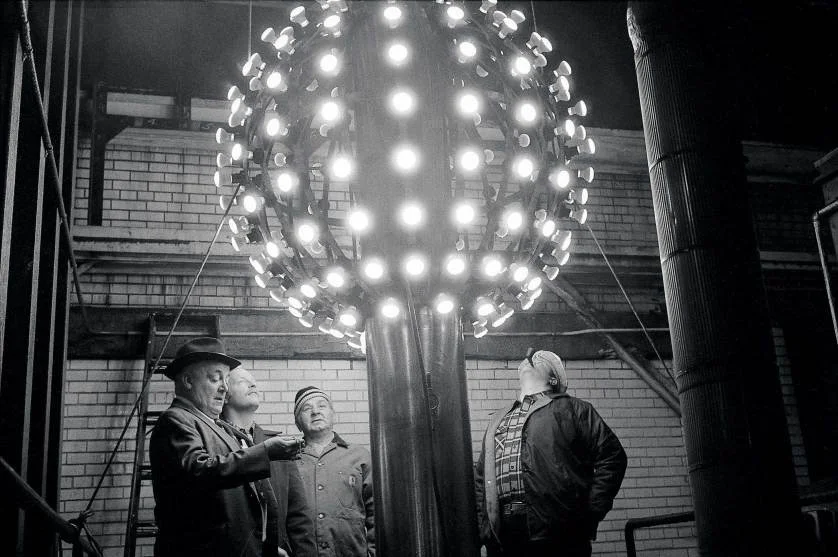
The original New Year's Eve mast from Times Square is coming to the North Star Grand Lodge site, where it will once again shine—this time lighting an outdoor ice rink in the heart of Fairbanks.